Does Health Insurance Cover Mobility Scooters?
Many people who struggle with walking long distances or standing for extended periods wonder the same thing: does health insurance cover mobility scooters? The short answer is yes, in many cases—but only if the scooter is deemed medically necessary and your specific plan includes durable medical equipment (DME) benefits.
Coverage rules vary significantly between Medicare, Medicaid, private employer plans, individual marketplace policies, and supplemental insurance. Below is a clear breakdown of the most common scenarios in the United States today.
Medicare (Part B) Coverage
Medicare Part B is the most frequent source of mobility scooter coverage for people 65+ or under 65 with certain disabilities.
Key requirements Medicare usually demands:
- A face-to-face examination with a doctor (or certain other qualified providers) within the past 6 months
- Written documentation that a cane, walker, or manual wheelchair is not sufficient for safe mobility inside the home
- Proof that the scooter will be used primarily in the home (not mainly outdoors or for recreation)
- The supplier must accept Medicare assignment (most reputable suppliers do)
What Medicare typically pays:
- 80% of the Medicare-approved amount after you meet the annual Part B deductible
- You pay the remaining 20% coinsurance (unless you have supplemental coverage)
- Many plans start with a rental period (often 13 months) before full ownership
If these criteria are met, Medicare usually covers a basic 3-wheel or 4-wheel scooter designed for indoor use.
Private Health Insurance & Employer Plans
Will my health insurance cover my mobility scooter under a commercial plan?
It depends heavily on the insurer and the specific policy.
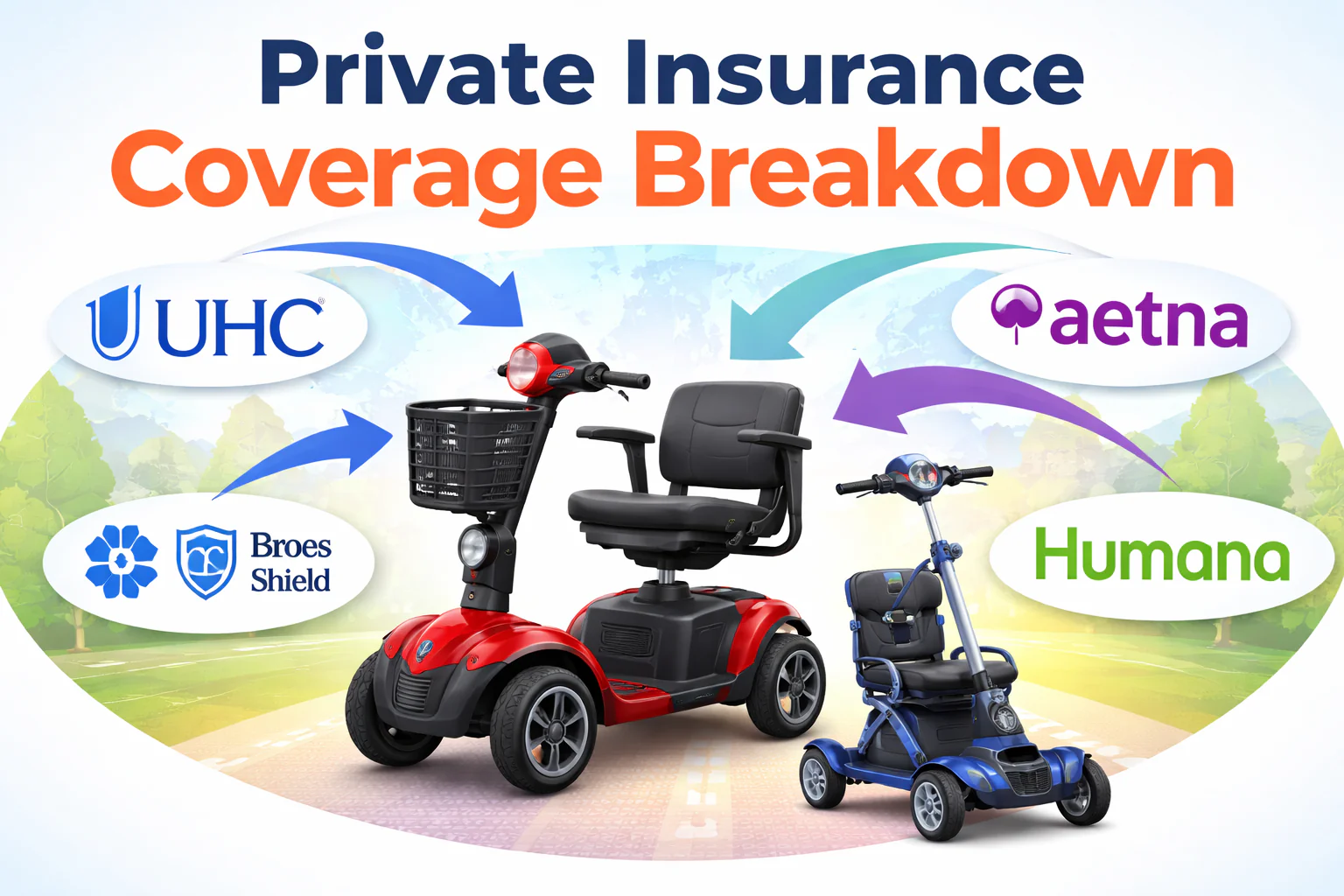
Common patterns among major carriers (Aetna, UnitedHealthcare, Blue Cross Blue Shield, Cigna, etc.):
- Many follow Medicare-like criteria for DME
- Require prior authorization
- Need a prescription + supporting medical records
- Often cover 50–90% after deductible and copay
- Some plans exclude scooters entirely or limit coverage to manual wheelchairs only
- High-deductible plans may leave you responsible for a large portion upfront
Quick tip: Log into your insurance portal → search “durable medical equipment” or call the member services number and ask:
“Do my benefits include power-operated vehicles or mobility scooters under the DME benefit?”
Medicaid Coverage
In most states, Medicaid covers mobility scooters when:
- The member qualifies for home health or DME benefits
- A physician documents medical necessity
- The scooter is the least costly alternative that meets the need
Coverage levels vary: some states pay 100%, others require small copays. Certain states also have stricter home assessments or prefer rentals first.
Quick Comparison: Typical Out-of-Pocket Cost Scenarios
| Insurance Type | Typical Coverage % | Your Likely Responsibility (after deductible) | Notes |
|---|---|---|---|
| Medicare Part B | 80% | 20% coinsurance | Must meet strict home-use criteria |
| Medicare Advantage | Varies (often 80–100%) | Copay or coinsurance | Some plans offer $0 DME copay |
| Private / Employer Plan | 50–90% | 10–50% + deductible | Prior authorization almost always required |
| Medicaid | 80–100% | $0–small copay | State-specific rules |
Popular Covered Models
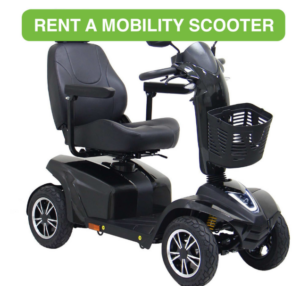
The scooters most commonly approved by insurance are compact, mid-weight models with these general specs:
- Weight capacity: 300–400 lbs
- Top speed: 4–5 mph
- Range per charge: 9–15 miles
- Easy disassembly (4–5 pieces) for transport
- Swivel seat and adjustable tiller
These features balance usability inside the home with reasonable cost to the insurer.
How to Find Out If Your Plan Will Cover It
- Call your insurance provider directly and ask about “power mobility devices” or “scooters” under the DME benefit.
- Ask your primary care doctor or specialist for a face-to-face mobility evaluation.
- Choose a Medicare-enrolled or insurance-contracted supplier (they handle paperwork).
- Get everything in writing before ordering.
If you’re exploring options or want help comparing models that are frequently approved, feel free to browse our selection or contact us at Safe Mobility Store → https://safemobilitystore.com/. We specialize in working with insurance claims and can often point you toward the quickest path to coverage.
Frequently Asked Questions
Does health insurance cover mobility scooters at all?
Yes — Medicare Part B, many private plans, and most Medicaid programs cover them when medically necessary for safe mobility inside the home.
Will my health insurance cover my mobility scooter if I only need it outdoors?
Usually no. Most plans require the device to be primarily for in-home use. Outdoor-only use is rarely covered.
Do I need a prescription to get coverage?
Yes — almost every insurer requires a physician’s written order and supporting documentation of medical necessity.
What happens if my claim is denied?
You can appeal. Many denials are overturned when additional medical records or a specialist letter are submitted.
Real customer experiences:
“Medicare paid 80% — the team at Safe Mobility Store handled all the paperwork. Life-changing.” — Robert K., 71
“Blue Cross covered mine after a quick appeal. Worth fighting for!” — Sisan M., 58
“Medicaid paid 100%. I can finally get around my house safely again.” — Jares T., 64
Ready to check your coverage or see models that are commonly approved?
Visit https://safemobilitystore.com/ or reach out — we’re happy to help you get moving more comfortably and affordably. 🛵

About author



Add comment